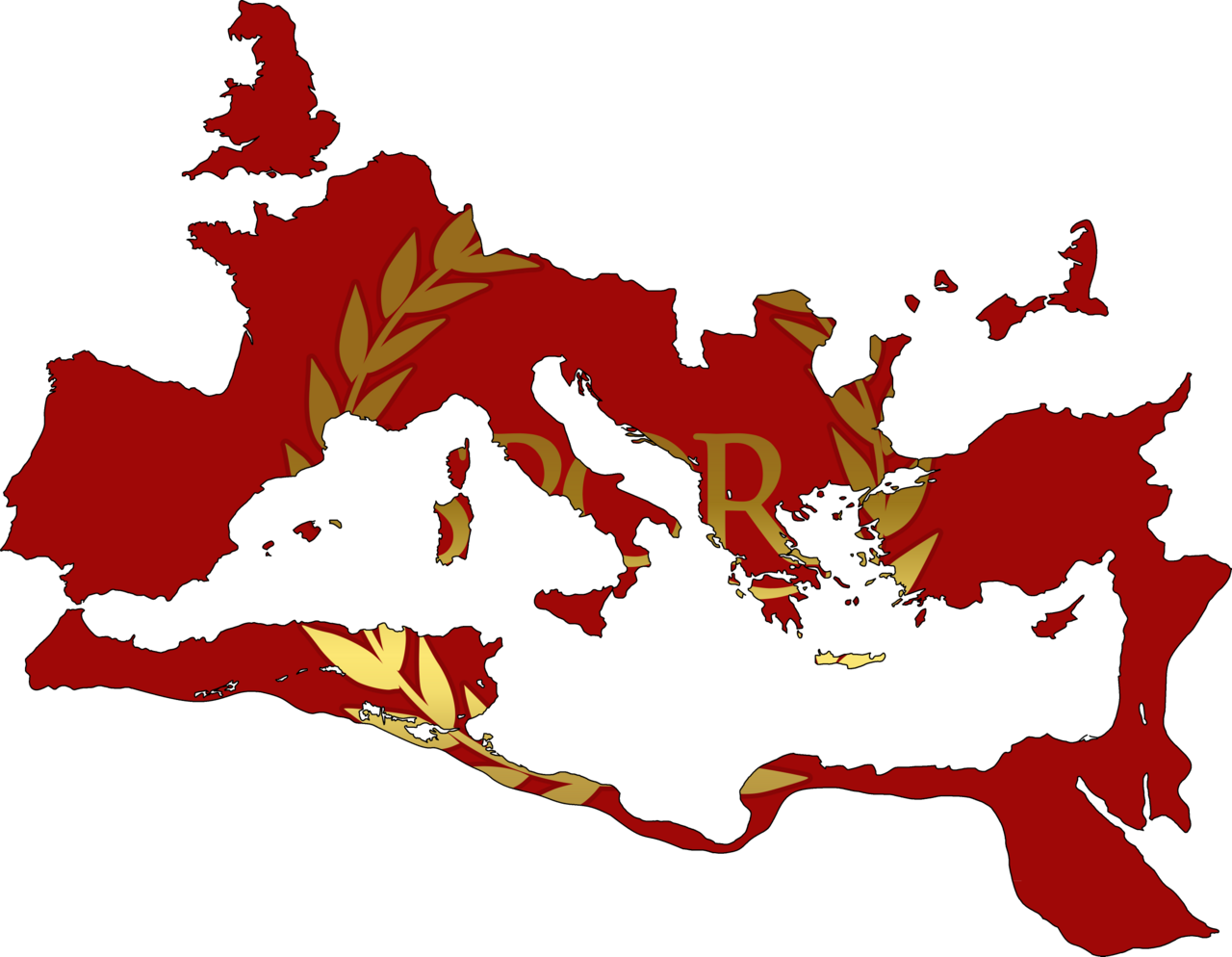
On the Reasons Why the Hellenistic World Became Roman
When, in 481 BCE, the Persian king Xerxes sends envoys to all cities of continental Hellas—except Athens and Sparta (which, in his view, are doomed to destruction)—demanding "earth and water" (a symbol of submission to his royal authority), representatives of seventy poleis gather in Corinth. They form an alliance to defend the two threatened cities, expel the Persians from Europe, and exact vengeance for the wrongs already suffered by the Greeks—and for those they would yet endure in the course of the war.
This pact was known to contemporaries as the "Swearers of Hellenes," due to the sacred oath the allies took before the god at Delphi, pledging to fulfill their agreed objectives. Some participants in the oath, like Syracuse, were too far away to act from a sense of direct threat to themselves. Modern-day "pragmatists" and "pacifists" would accuse Athens itself of having provoked the aggressor by supporting the Ionian Greek revolt and the Egyptian anti-Persian resistance a quarter-century earlier. The city of the Owl had no direct interests to pursue in this manner; its actions were dictated by a sense of honor and loyalty, or by a visionary outlook and a long-nurtured ambition for world power—or perhaps by both.
In any case, the Greek unity against a common threat was not repeated during Rome’s first encounters with the Hellenistic world, nor at any subsequent stage, right up to the moment when Queen Cleopatra VII was bitten by the asp—a bite that ended any Greek-speaking political entity that was not Rome.
Moreover, the contrast is striking between those poleis that had spent up to two centuries under Persian rule—like Miletus or Halicarnassus, perpetually rebellious, rejecting all things Persian—and the great Hellenistic societies that immediately and permanently felt themselves to be Roman. So permanent was this identity that in 867 CE, during peace negotiations hosted by the Franks, when they announced the entry of the guests from Constantinople as the "Most Noble Embassy of the Emperor of the Greeks," the latter were filled with deep and sincere perplexity. For them, their ruler could be nothing other than the Emperor of the Romans; the Greeks were something from the distant past. Their language was Greek, but the identity and empire they represented were Rhomaic—that is, Roman.
This bond was not only swift and lasting but also strong enough to survive the collapse of the world in Britain, Iberia, Gaul, and Italy, and to teleport Rome itself—along with its gods, Senate, consuls, and games—from Latium to the geographical bridge between the two halves of old mainland Hellas: the Bosporus.
The difference in the reaction of the Hellenic/Hellenistic world to these two external aggressive forces is so radically different, and its consequences so important, that it certainly deserves special attention from historians, philosophers, anthropologists, and sociologists. This essay does not aspire to assume the role of any of them. It will have fulfilled its purpose if it succeeds in sparking interest in the subject through its few provocative assertions, if it arouses the reader’s curiosity with the questions it leaves open, and if it manages to entertain them, if only a little, with the author’s clumsy analogies and metaphors.
Three of the four conscious civilizational attempts at hegemony over the Mediterranean in antiquity were doomed to encounter the wars, warships, culture, religion, and thought of Greek civilization. The fourth is its emanation—that of Alexander—and we will return to it later. Only that of Rome was realized successfully, completely, and permanently.
Persia, which elsewhere (to the east and south of the Greek-speaking world) created the largest empire to that point, twice managed—with enormous effort and at catastrophic cost—to subdue the poleis of Asia Minor, only to fail spectacularly in its attempt to push westward from there. It encountered an unprecedented Greek front against itself. This westward movement would prove fatal to the empire, for it was struck down precisely by the lash of its own Hellenic campaigns—in the person of Alexander.
Carthage established maritime hegemony over the western Mediterranean as early as the 7th century BCE. Its power was of the type that Athens would exercise two centuries later to strengthen the Delian League, or that Venice would repeat nearly two millennia later to successfully dominate the eastern Mediterranean, and which would later be replicated by the Portuguese and Dutch to achieve dominance over the world’s oceans. The city of Dido seized key ports and transformed them into convenient naval bases from which its biremes could cruise and control the entire nearby waters: the Pillars of Hercules (Gibraltar), Cartagena in present-day Spain, Utica in North Africa, the island of Sardinia, and many others. This was a deliberate and enduring strategy on the part of the Phoenician colony from Tyre, not a situational adjustment.
Throughout its nearly five centuries of maritime hegemony, Carthage only embarked on military conquest of inland territories and their settlement with its own people at the final stretch—between the First and Second Punic Wars. It did so under duress, because it was losing control of the sea lanes it had previously dominated, to a city that had had no fleet at all the day before: Rome. The fear of being crushed between a hostile force at sea and the tribes occupying the territories up to their scattered ports prompted the Carthaginians to begin colonization of the type that would be recognized in the 19th century by the British in Australia or the French in Algeria. Moreover, they did so intensively and resolutely only on the eastern Iberian coast and in their nearby North Africa.
There was, however, one major exception that, from day one, did not fit Carthage’s initial approach to conquest: Sicily—the island that, together with Malta and Calabria, conceptually or actually (if one controls all three and possesses a powerful war fleet) divides the Mediterranean into eastern and western. There, from the very beginning, the Punic metropolis acted in the manner it would choose elsewhere only when it realized it might lose everything. It fought for every inch of land. It emptied cities and villages, settling them with its own people. It paid a huge price in lives and money, sometimes forced to fight in a way we would today call guerrilla warfare, and at other times drawn into what genuinely resembled trench warfare, all to succeed in controlling between half and a third of the island within the five centuries we are considering.
Here, perhaps, an explanation is due as to why we are taking this detour through Punic history while seeking to understand Rome’s successful conquest and integration of the Hellenistic world—and why it succeeded where others failed. Is Carthage one of these few others? Is it not inevitable that a city which, for five hundred years, unchallenged, ruled the entire western Mediterranean, would shift its interests, ambitions, and warships to the eastern? So why did it not do so? Did it ever intend to move in that direction, and if so, what prevented it?
The truth is, we do not know. The Carthaginians were a diligent writing people, but almost nothing of their written legacy has reached us. Their behavior in Sicily, however, has an undisputed historical explanation, and it provides an indirect answer to some of the questions raised a moment ago. This explanation even has an identity and a name: the city of Syracuse.
Founded in 712 BCE as a Corinthian colony on the eastern coast of Sicily, it quickly managed to take advantage of its location and the trade routes that intersected there. Within a century, it was already an indispensable factor in Magna Graecia, and within two, probably the largest and richest Greek polis of all. Even under the succession of highly ambitious tyrants who would rule it, Syracuse never showed an appetite for hegemony over anything beyond Sicily itself and Magna Graecia. Accordingly, Carthage’s centuries-long struggle for every inch of land on the island could have only two possible reasons. One is that the city of Dido feared that appetite comes with eating and could not afford to wait and see where the Corinthian descendants would turn once they had mastered the immediate vicinity. The other would be that Carthage needed full domination over Sicily in order to move eastward. In any case, the ancient Greek world proved to be an insurmountable barrier for a power that controlled everything to its west, just as it was for Persia on its other side and at the same time.
Why, then, did nothing similar work when Rome began its expansion, threatening the freedom of the Greek poleis in southern Italy (Magna Graecia), just two centuries later?
The obvious answer is that the Hellenic polis mosaic, in which every polis guards its own against every other, but all (or at least most) are ready for a common resistance against an external barbarian (i.e., non-Greek) conqueror, had in the meantime transformed into something else. It had been replaced by the far more complex Hellenistic world, characterized by great absolute monarchies that were in near-constant enmity with one another, possessed a sense of common heritage, but were far too realpolitik (forgive the anachronism) in their behavior to be successfully mobilized for collective defense of an unclear common identity.
The problem with this simple and logical dual explanation is that the dynamics of events reject it in a rather unambiguous manner.
In 279 BCE, a year after the beginning of Rome’s expansion into Magna Graecia, a vast Celtic horde, led by the chieftain Brennus, invaded Macedonia and mainland Greece. The invaders’ base was in the western Balkans and Central Europe, which they had invaded and settled in the previous half-century. The opportunity to begin their great march south was presented by the civil war in Macedonia, in which participants included not only the poleis and polis formations of the surrounding original Greek world but also at least three of the new powerful Hellenistic kingdoms: Epirus (the state of the Molossians), Lagid Egypt, and the Seleucid kingdom (what remained of the conquered Persia after the division following Alexander’s death).
This war was started and won by Ptolemy Ceraunus, the firstborn son of Ptolemy I Soter, the Hellenistic king of Egypt and founder of the Lagid dynasty, whose last representative would be the aforementioned Cleopatra. Ceraunus fought for the Macedonian throne because his younger half-brother, Ptolemy II Philadelphus (who, among other things, was the initiator, commissioner, and sponsor who asked the Alexandrian Jews to gather their diverse sacred writings into a single collection and to translate it into Greek, as a result of which he received, published, and archived in the then-largest library in the world the Septuagint—the oldest version of the compilation of religious texts we now know as the Bible), had settled on the throne in Egypt.
Seleucus I, the last surviving Diadoch, entered the game in support of Ceraunus, hoping afterward to use him to incite a civil war in Egypt. He made the mistake of going in person to Macedonia to oversee his protégé, where the latter proceeded to murder him with his own hand. Pyrrhus, king of the Molossians, who until then had supported Ceraunus’s opponent, Lysimachus, was bribed by Ptolemy II with nine thousand soldiers (5,000 phalangites and 4,000 cavalry) and 50 war elephants to stop hindering his reckless half-brother. The Egyptian king clearly wagered that Ceraunus’s Macedonian adventure would keep him occupied and far from the thought of returning to Alexandria. Polis federations such as the Aetolian and Achaean Leagues, as well as the perpetually rebellious Athens, participated in this ancient melodrama against whoever seemed closest to victory at any given moment, with a not-so-well-concealed desire to break or weaken Macedonian power.
Well, if the fantasy of conquering and plundering the heart of civilization tempts you, if you have 152,000 foot soldiers and 24,000 cavalry who fully share your fantasy, and before you lies the idyllic picture of domestic harmony described above, you might not need to be a particularly warlike Celtic chieftain from the early Late Iron Age to decide that this is the moment to realize your dreams. That is exactly what Brennus decided to do, leading his colleagues Bolgios and Acichorius, along with the aforementioned one hundred and seventy-six thousand Celtic raiders, in a full-scale invasion of the Balkan Peninsula. And he made the mistake of his life.
He encountered resistance marked by a pan-Hellenic unity and resolve absolutely comparable to that which had met the Persian king two centuries earlier. The great Hellenistic kingdoms pressed the salvific pause button on their Macedonian game. Poleis that had been warring among themselves until that moment united their forces for a common resistance. From there, the action unfolded like a rapid remake of the Greco-Persian Wars, in which one side had read the original and learned from the past, while the other had not heard of it and did not understand where it was heading until it met its end head-on.
In the first engagement, the Celts defeated the Macedonian army, captured King Ptolemy Ceraunus, and beheaded him, after which they continued south. Along the way, they looted and committed outrages, but failed to capture a single city, for despite their numbers and audacity, they possessed no siege techniques or knowledge. Thus, this campaign did not cause damage comparable to the Persians’ earlier burning of Athens. This pan-Gallic blitzkrieg (again, forgive the anachronism) was met by the allies at Thermopylae, where the Celtic force was beaten but not broken. Recovering, Brennus managed to bypass the pass and, not without reason, hoped to attack the Greeks from the rear. This is without accounting for the capabilities of the Athenian war fleet, which managed to swiftly evacuate the Achaeans and Aetolians blocked on land and transport them to the site of the next engagement with the enemy, where the rest of the Greek forces were already gathered. The final encounter was at Delphi—before the sanctuary. This time, the Celts were crushed and ceased to exist as an organized military force in the Balkans. Brennus committed suicide. The curtain fell.
The Hellenistic world gave the same united, resolute resistance to the external invader as the Hellenic world had before it.
We must seek the answers to the questions posed at the beginning elsewhere.
Most likely in Rome itself and in its approach to those whose descendants would become convinced Romans without ever ceasing, for a moment, to speak Greek and bear the rich heritage of ancient Greece.
Or perhaps in the particular attitude of the Hellenistic people, states, cities, and kings toward the new, different candidate for hegemon.
And why not in something entirely different—in the unfulfilled promise of an idea that has already succeeded in changing the known world beyond recognition, yet still appears like a missed opportunity?
What if, in Alexandria, Antioch, Athens, and Pergamon, they saw in Rome precisely the best way to realize the idea?
If the conquest, from the very beginning, is not exactly what it appears at first glance, and from a certain point onward is not exactly Roman either?
To be continued...